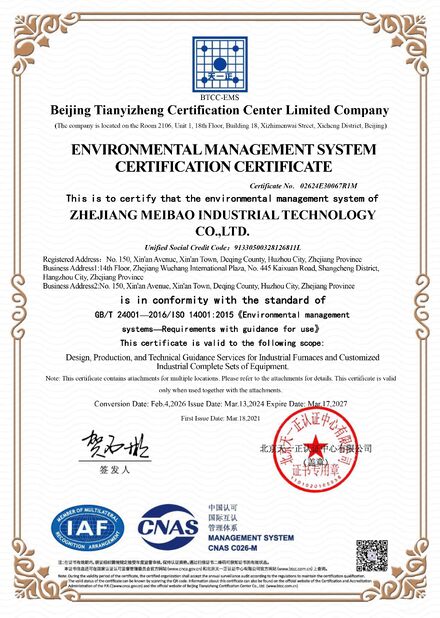
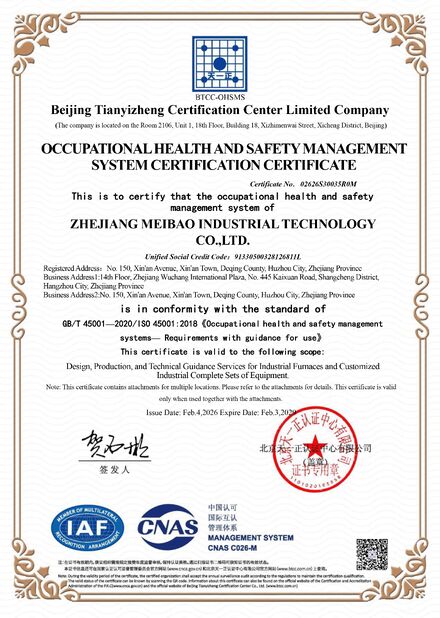
Written by: Zhejiang Meibao Industrial Technology Co., Ltd.
Technical Review: Meibao Engineering Team
Technical Field: Grain Drying and Industrial Hot Air Systems
Last Updated: 2026-08-21
When planning a corn drying project, customers often begin with a simple question: Should the hot air furnace use wood chips or biomass pellets?
Both fuels can be technically suitable. However, the fuel with the lower price per tonne does not always provide the lower drying cost.
Fuel moisture, net calorific value, particle size, ash content, feeding stability, local supply and storage conditions all affect furnace design and actual energy consumption. The heat source must also match the corn dryer, required process-air temperature, operating hours and local environmental requirements.
For this reason, Meibao evaluates the fuel and the drying process as one complete system rather than selecting a standard furnace based only on the fuel name.
Compare Useful Heat, Not Only Fuel Price
Two biomass fuels with the same purchasing price can produce very different amounts of useful heat.
Before comparing wood chips and biomass pellets, the customer should collect the following local fuel data:
- Price per tonne
- Net calorific value
- Moisture content
- Ash content
- Particle size and size distribution
- Bulk density
- Seasonal quality variations
- Annual supply capacity
- Transportation distance
- Required storage conditions
Fuel moisture is particularly important. Part of the heat released during combustion must first evaporate the water contained in the fuel. A fuel with a high moisture content may therefore require a greater mass of fuel to provide the same useful heat.
The operating cost should be evaluated according to useful heat delivered to the drying system, not only according to the fuel purchase price.
A simplified comparison principle is:
Cost of Useful Heat = Fuel Cost ÷ Usable Heat Obtained from the Fuel
The usable heat depends on the fuel's net calorific value, moisture, combustion conditions, furnace configuration and overall system efficiency.
Engineering Note from the Meibao Engineering Team
Before recommending wood chips or biomass pellets, the engineering team needs actual fuel samples or reliable test data. A fuel name alone is not sufficient for selecting the combustion and feeding system.

Using Wood Chips for Corn Drying
Wood chips may be an economical choice in regions with forestry, furniture manufacturing, sawmills or other wood-processing industries.
Their potential advantages include:
- Relatively low local purchasing cost
- Wide availability in some regions
- Reduced dependence on natural gas or oil
- Use of locally available renewable resources
However, untreated wood chips may have considerable variations in moisture, size and shape.
Oversized pieces, long strips or mixed foreign materials can affect feeding stability. High fuel moisture may reduce the useful heat obtained from each tonne and make temperature control more difficult.
A wood chip-fired system therefore needs to consider:
- Fuel storage and moisture protection
- Suitable silo design
- Bridging and blockage prevention
- Appropriate conveying and feeding equipment
- Furnace and grate configuration
- Combustion-air distribution
- Ash removal
- Fuel quality monitoring
The feeding system cannot be selected from nominal furnace capacity alone. It must be designed according to the actual wood chip dimensions, bulk density and expected consumption rate.
Using Biomass Pellets for Corn Drying
Biomass pellets generally have a more consistent shape, size, moisture level and calorific value than untreated wood chips.
This consistency can provide several operational advantages:
- Easier automatic feeding
- More stable combustion
- Faster response to load changes
- More consistent process-air temperature
- Smaller fuel-storage volume for the same mass
- Simpler fuel handling and site management
These characteristics can be useful for corn drying systems that operate continuously or require frequent temperature adjustment.
However, biomass pellets may have a higher purchasing price. Pellet quality may also vary between suppliers, especially in ash content, mechanical strength and actual calorific value.
The customer should not assume that every pellet product will perform in the same way. Supplier data and fuel samples should still be checked before the furnace and feeding system are finalized.
Wood Chips and Biomass Pellets: Key Differences
This comparison does not mean that biomass pellets are always better than wood chips.
In a location with stable, dry and properly sized wood chips, a wood chip-fired system may provide a strong economic advantage. In another market, inconsistent wood chip quality may make biomass pellets more practical over the full operating life of the project.
Fuel Selection Changes the Equipment Configuration
Changing from wood chips to biomass pellets does not only change the fuel.
It may also change:
- Fuel-storage volume
- Silo shape
- Conveyor configuration
- Feeding mechanism
- Combustion chamber design
- Grate selection
- Combustion-air distribution
- Ash-removal arrangement
- Control response
- Maintenance requirements
The combustion system must match the physical characteristics of the fuel.
If the fuel supply is expected to change between wood chips and pellets, this requirement should be discussed at the beginning of the project. A system designed for one fuel cannot automatically be assumed to handle every other biomass fuel without adjustment.
Maintaining Stable Process-Air Temperature
Corn drying requires a stable and controllable supply of hot air. Fuel quality variations can directly affect combustion and process-air temperature.
In a customized biomass-fired system, the control strategy may coordinate:
- Fuel feeding rate
- Primary and secondary combustion air
- Furnace pressure
- Cold-air mixing volume
- Process-air temperature
- Hot-air fan operation
- Dryer load
For a project requiring approximately 130°C process air, the control system must first confirm where this temperature is measured. It may refer to the furnace outlet, the air after mixing or the dryer inlet.
The temperature control point should match the actual corn drying process.
According to Meibao's published industrial furnace data, certain direct biomass-fired configurations use biomass with a reference calorific value above 3,200 kcal/kg. Under specified design and operating conditions, reference performance may include thermal efficiency above 95% and continuous temperature stability of approximately ±5°C.
These figures describe general equipment capabilities under corresponding conditions. They are not fixed guarantees for every corn drying project. Final efficiency, temperature stability and fuel consumption must be confirmed according to actual fuel data and system design.
Direct-Fired or Indirect-Fired Biomass Heating?
Fuel selection and hot air cleanliness must be considered together.
In a direct-fired system, cleaned high-temperature gas is adjusted to the required process temperature and then used for drying. This configuration has a relatively simple heat-transfer path and can provide high thermal efficiency.
However, the suitability of direct-fired air depends on the intended use of the corn, fuel quality, purification configuration and local requirements.
In an indirect-fired system, combustion gas and process air are separated by a heat exchanger. The dryer receives heated air without direct contact with combustion gas.
An indirect-fired configuration may be selected when the project has stricter process-air cleanliness requirements. It may also involve additional equipment investment and heat-transfer losses.
The Meibao Engineering Team evaluates both technical and economic conditions before recommending a configuration.
Total Operating Cost Is More Than Fuel Consumption
Fuel consumption is only one part of the operating cost.
A complete economic evaluation should also include:
- Electricity consumption
- Fuel transportation
- Fuel unloading and storage
- Labour requirements
- Ash disposal
- Dust and emission control
- Equipment maintenance
- Spare parts
- Production interruptions caused by unstable fuel quality
- Expected annual operating hours
For example, low-priced wood chips may lose part of their economic advantage if they contain excessive moisture, require frequent manual handling or cause unstable feeding.
Higher-priced pellets may still be competitive if they reduce labour, simplify storage and provide more stable continuous operation.
The correct comparison depends on the customer's local market and cannot be replaced by a universal fuel-consumption table.
The Heat Source Must Match the Complete Drying System
The biomass furnace is only one part of a corn drying project.
Depending on the required supply scope, a complete system may include:
- Corn receiving and conveying equipment
- Grain drying equipment
- Biomass hot air furnace
- Fuel storage and feeding system
- Combustion-air and mixing-air equipment
- Fans and hot air ducts
- Dust collection and emission-control equipment
- Corn discharge and cooling equipment
- Electrical control system
- PLC and HMI
- Safety interlocks and alarms
The furnace, dryer, fuel system and automatic controls must be designed as one coordinated production system.
Related Biomass and Industrial Drying Experience
Meibao has developed biomass-fired hot air and industrial drying systems for different materials and operating conditions in international markets.
Related experience includes biomass-fired hot air furnace systems for rubber drying in Indonesia, industrial hot air systems for rubber drying in Malaysia and hot air furnace equipment for fertilizer drying in Thailand.
These projects are not presented as corn drying cases. Different materials require different temperature, airflow and cleanliness conditions.
However, they demonstrate Meibao's experience in evaluating local fuels, designing continuous hot air systems, controlling process-air temperature, integrating furnaces with drying equipment and supporting international project implementation.
Information Required for Fuel Evaluation
To compare wood chips and biomass pellets for a specific corn drying project, the customer should provide:
- Project country and installation location
- Required corn drying capacity
- Initial and target moisture content
- Required process-air temperature
- Daily and annual operating hours
- Available wood chip specifications
- Available biomass pellet specifications
- Fuel moisture and net calorific value
- Fuel particle size
- Local price per tonne
- Transportation and storage conditions
- Local electricity price
- Emission requirements
- Available factory space
- Required automation level
Based on this information, Meibao can compare the energy options and develop a suitable furnace, feeding system and complete drying configuration.
Frequently Asked Questions
Are biomass pellets always more efficient than wood chips?
Not necessarily. Actual performance depends on moisture, calorific value, combustion conditions and system design. Consistent pellets may simplify control, while good-quality local wood chips may offer a lower operating cost.
Can one furnace use both wood chips and biomass pellets?
It may be technically possible in some configurations, but it should not be assumed. The feeding system, grate, combustion-air distribution and control strategy must be designed according to the expected fuel range.
How does fuel moisture affect corn drying cost?
Higher fuel moisture reduces the useful heat obtained from each tonne because part of the combustion heat is used to evaporate water contained in the fuel.
Can fuel consumption be confirmed before fuel data are available?
Only a preliminary estimate can be provided. A reliable calculation requires fuel calorific value, moisture, system efficiency, drying load and local operating conditions.
Select the Fuel as Part of the Complete Project
The correct choice between wood chips and biomass pellets depends on more than the price per tonne.
Fuel quality, supply reliability, storage, feeding, temperature control, maintenance and local environmental requirements all influence the final result.
Meibao evaluates these factors together with the corn drying capacity, moisture reduction target, dryer design and investment plan. The Meibao Engineering Team then develops a customized hot air furnace and grain drying system according to the customer's local technical and economic conditions.
Tell us your available biomass fuels, local prices, fuel specifications, corn drying capacity and moisture requirements. We will evaluate the practical energy options for your project.
About the Technical Review Team
The Meibao Engineering Team provides customized process and equipment engineering for detergent production lines, chemical production equipment, industrial hot air furnaces, drying systems and resource recovery projects.
Its work covers process analysis, system configuration, local energy evaluation, equipment integration, automation design and project implementation.


 Your message must be between 20-3,000 characters!